
What role does soldering play in the assembly of Pcba printed circuit board
soldering play in the assembly of Pcba printed circuit board
The printed circuit board (PCB) is a rigid or flexible platform for electrical connections in electronic devices. It consists of multiple layers of conductive copper and insulating material, with solder pads or lands on the surface of each layer. A PCB also features a silkscreen or other printing layer with a legend indicating where components are located. It may also include test points and other identifying text.
The bare or unpopulated printed circuit board pcba is then assembled with the electronic components that will make it functional. The resulting device is then referred to as a PCBA, which stands for “printed circuit board assembly.” The process of populating a PCB and making it into a PCBA varies depending on the type of device in question and the available space. Some devices, such as mobile phones and computers, need a compact PCB with high-density surface-mount components; others require a more spacious design with through-hole components.
There are many ways to manufacture a PCBA, but the most common methods involve the use of surface-mount technology (SMT) or through-hole technology (PTH). In the former case, the component leads are inserted into holes surrounded by conductive pads on the PCB’s surfaces; solder paste, which has been pre-applied to these pads, holds them in place. In the latter, the component pins line up with conductive lands on the PCB’s surfaces and are fixed in place by solder.
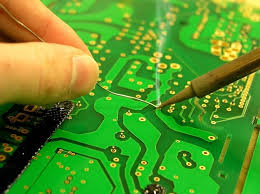
What role does soldering play in the assembly of Pcba printed circuit board
In order to ensure that the resulting PCBA will function as intended, it is vital to perform a thorough testing process. If any defects are detected during the testing phase, technicians must desolder and replace the defective components. This is a procedure called rework, and it is necessary for the production of high-quality PCBAs.
Multilayer PCBs are becoming increasingly popular with the increasing popularity of smartwatches and smartphones. This is because they offer the benefit of more efficient signal transmission. Compared to single- or double-layer PCBs, they can handle higher current levels and have wider power supply lines. Moreover, they are capable of supporting more complicated electronic functions.
Nevertheless, the cost of multilayer PCBs is higher than that of single- or double-layer boards. Moreover, the manufacturing time is longer. Hence, it is important to choose a PCBA manufacturer that can offer competitive pricing and shorten the lead time.
When choosing a PCBA manufacturer, it is essential to select one that can provide high-quality products in accordance with DFMA standards. This way, you can avoid expensive and time-consuming errors in the manufacturing process. Additionally, it is also crucial to work with a company that can provide an accurate quote for your project. Furthermore, the company should be able to deliver your boards on time. This is important because a delay in production can lead to missed deadlines and hefty fines.